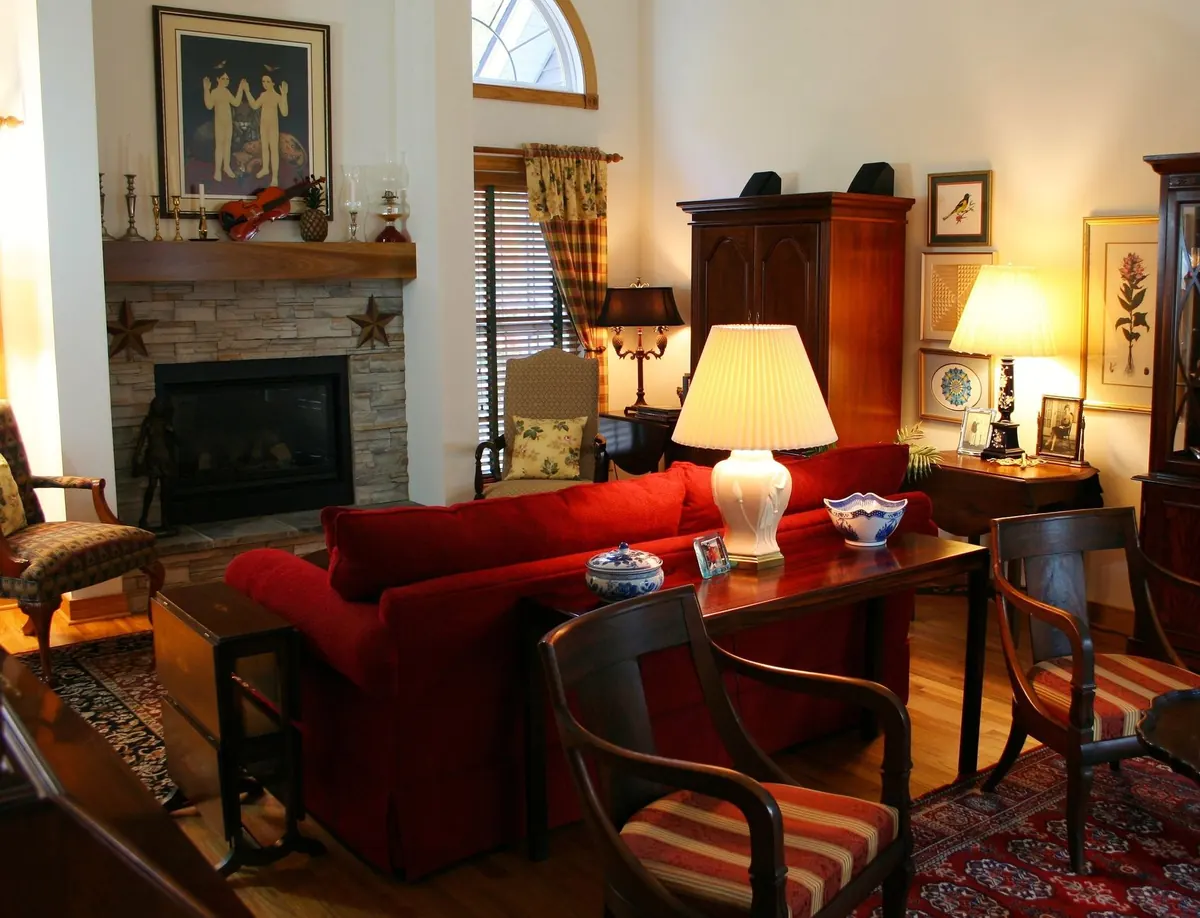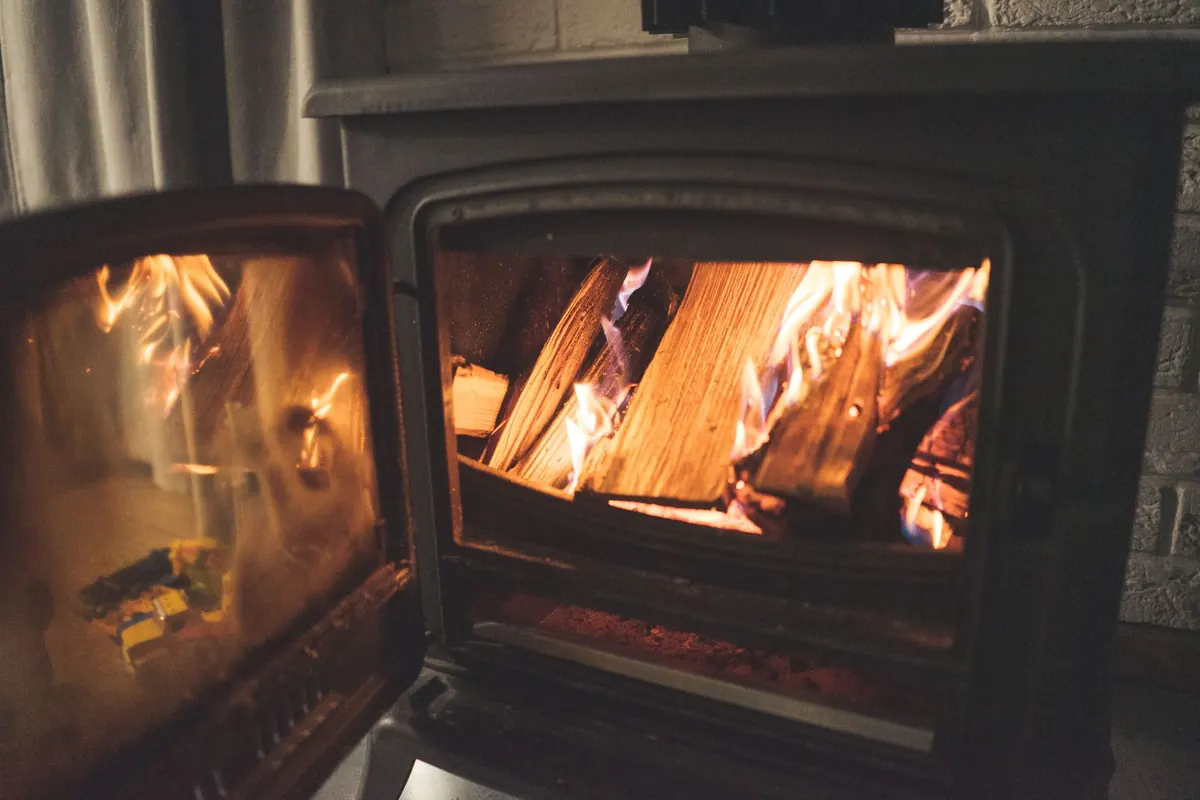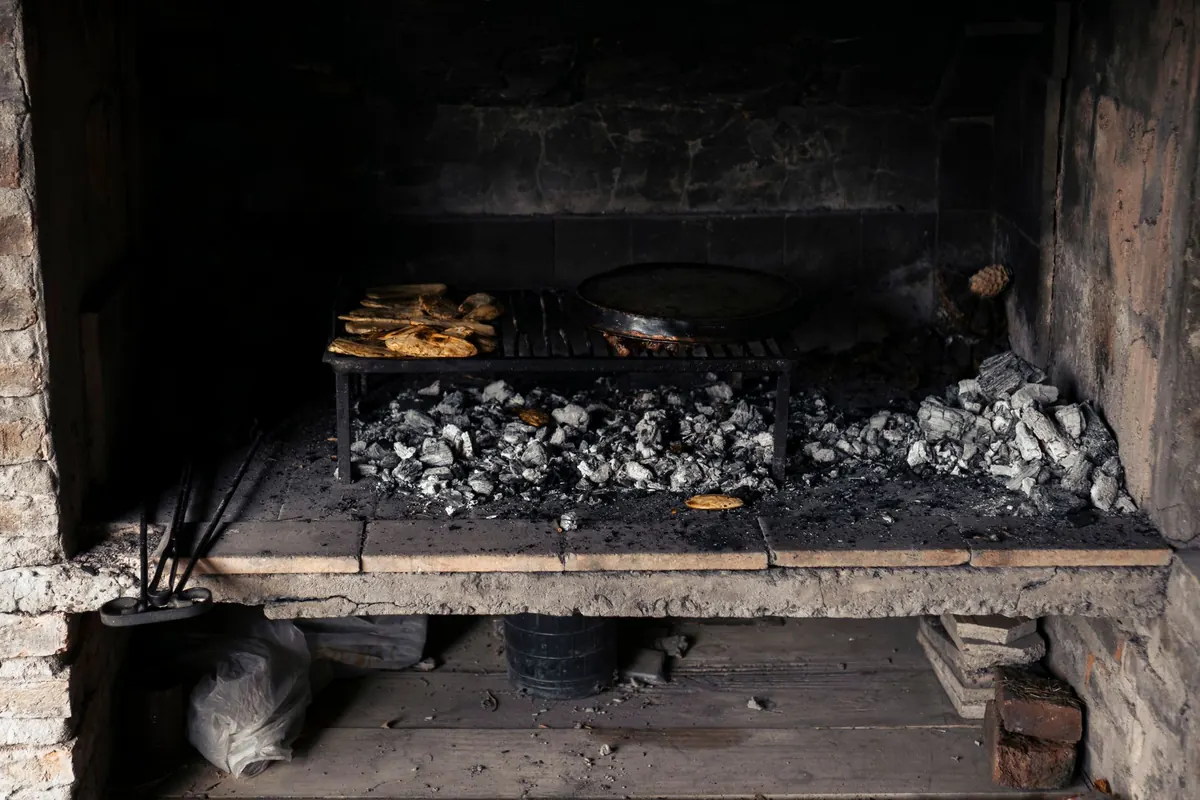
A stone hearth is usually the oldest thing in the room, and the hardest to argue with. It sets the tone before you have hung a single picture: cool, grey, slightly echoing, with a soot mark or two that no amount of scrubbing will shift. Rather than fighting that, the most comfortable rustic rooms lean into it. They build texture around the stone — old wood, raw wool, dull brass, greenery cut from the garden — until the fireplace reads less like a structural feature and more like the centre of the house.
Start with the bare stone
Clear the hearth completely before you add anything. Take everything off the mantel, brush out the ash, and look properly at what you have: the proportions of the opening, the depth of the shelf, whether the stone is rough rubble or smooth ashlar. A wide, shallow mantel will take a row of candlesticks and very little else. A deep one can hold a stack of books, a bowl and a lamp without looking crowded.
Then decide what the hearth is for. Through winter it is fire and fuel; in summer, when the grate is cold, it becomes a display — a jug of foliage, a candle, a stoneware pot of dried stems. Knowing which job it is doing stops you buying things that only work for half the year.
Reclaimed timber, marks and all
Wood is the quickest way to warm up cold stone. An old oak beam cut to length makes a mantel that looks as though it has always been there. Failing that, reclaimed floorboards, scaffold boards or a length of driftwood will do the same job for less. Look for timber that has already done something useful with its life: nail holes, saw marks, a weathered grey face that only sanding would spoil.
Keep the finish plain. A wipe of hard wax oil or a thin coat of boiled linseed oil feeds the wood without turning it glossy, and it can be topped up every year or so. Nothing looks more wrong against old stone than a high-shine lacquer.
Where reclaimed wood earns its place
- A plank mantel above the opening, thicker than it needs to be.
- A shallow wooden bowl on the shelf for matches, a candle snuffer and a stub of pencil.
- A low stool or crate beside the fire holding a few days' logs.
- A board leaning against the wall, with a hook for the poker and brush.
Two sensible cautions. If old timber shows fresh dust beneath small holes, treat it as active woodworm and leave it. If it wears flaking paint of unknown age, it is often simpler to keep that painted face rather than sanding it back yourself. And respect the clearance distances your stove or fire manufacturer specifies — never stack logs against a stove, and keep timber well back from an open grate.
Stone, slate and pebbles
Stone on stone sounds like too much of a good thing, but it works when the pieces are small and deliberate. A stack of slates makes a solid little plinth for a candle. A handful of flat pebbles in a shallow dish gives the shelf weight. A single chunk of limestone, pale and pitted, can sit on the floor beside the fire as sculpture.
Watch what you load onto the shelf itself. Mantels in older houses are often fixed with a couple of brackets into masonry, and stone is heavy. Keep the big pieces on the hearth slab or the floor, and save the shelf for lighter things.
Wool, linen and the soft layer
After all that hardness, the room needs something that gives. A wool rug in front of the hearth is the obvious move, but the details matter: wool handles stray sparks better than most synthetics, and it looks better as it ages. If the rug sits within spitting distance of an open fire, add a mesh guard.
Build the soft layer in neutral, undyed tones — oatmeal, charcoal, a faded rust — and let the stone and timber supply the contrast. A linen cushion on the fireside chair, a sheepskin over the arm of a bench, a heavy wool throw folded on a log basket. Swap the throw for something lighter in linen once the fire is out for the season, and the hearth changes with the weather without you buying anything new.
Brass, iron and a little copper
Metal gives the arrangement a spine. Iron fire tools beside the opening, a brass candlestick or two on the shelf, a copper bucket for ash or kindling. Choose two metals and let one lead; three starts to look like a collection rather than a decision.
Leave the finishes honest. Tarnished brass, dark iron and a copper bucket gone brown with age sit naturally with reclaimed timber. If you do polish, polish one piece and leave the rest alone so the room still looks lived in rather than staged.
Foliage through the seasons
Greenery is what keeps a hearth from looking like a museum display, and it costs almost nothing if you cut it yourself. In spring, pussy willow and a few daffodils in a stoneware jar. In summer, dried grasses or lavender, or nothing at all but a bowl of stones. In autumn, seed heads, rosehips and a branch or two of oak. In winter, ivy, holly, dried orange slices and a jug of eucalyptus.
Dried material goes brittle fast near a fire, so arrange it with the grate cold and replace it before it crumbles. Shake foraged stems outside before bringing them in, and pick from your own garden or a verge where cutting is allowed rather than from anything planted or protected.
The five-minute reset
A styled hearth is really just a tidy one with good ingredients. Once a week, run through this and it will hold its shape.
- Empty the ash pan and sweep the slab with a stiff dry brush — skip water on porous stone.
- Restock the log basket, keeping it to one type of wood so it looks intentional.
- Pull out anything dead, dusty or out of season: old foliage, burnt-down candles, curling paper.
- Straighten the textiles — rug square to the opening, throw folded, cushion plumped.
- Light two candles and see how it reads from the doorway. Move one thing, then stop.
The trick with rustic styling is restraint. Reclaimed wood, rough stone, wool and a little brass will carry a hearth for years. Add foliage as the seasons turn, replace what wears out, and resist filling every empty patch of stone. The gaps are part of the look.
Photo: Mario Amé / Pexels