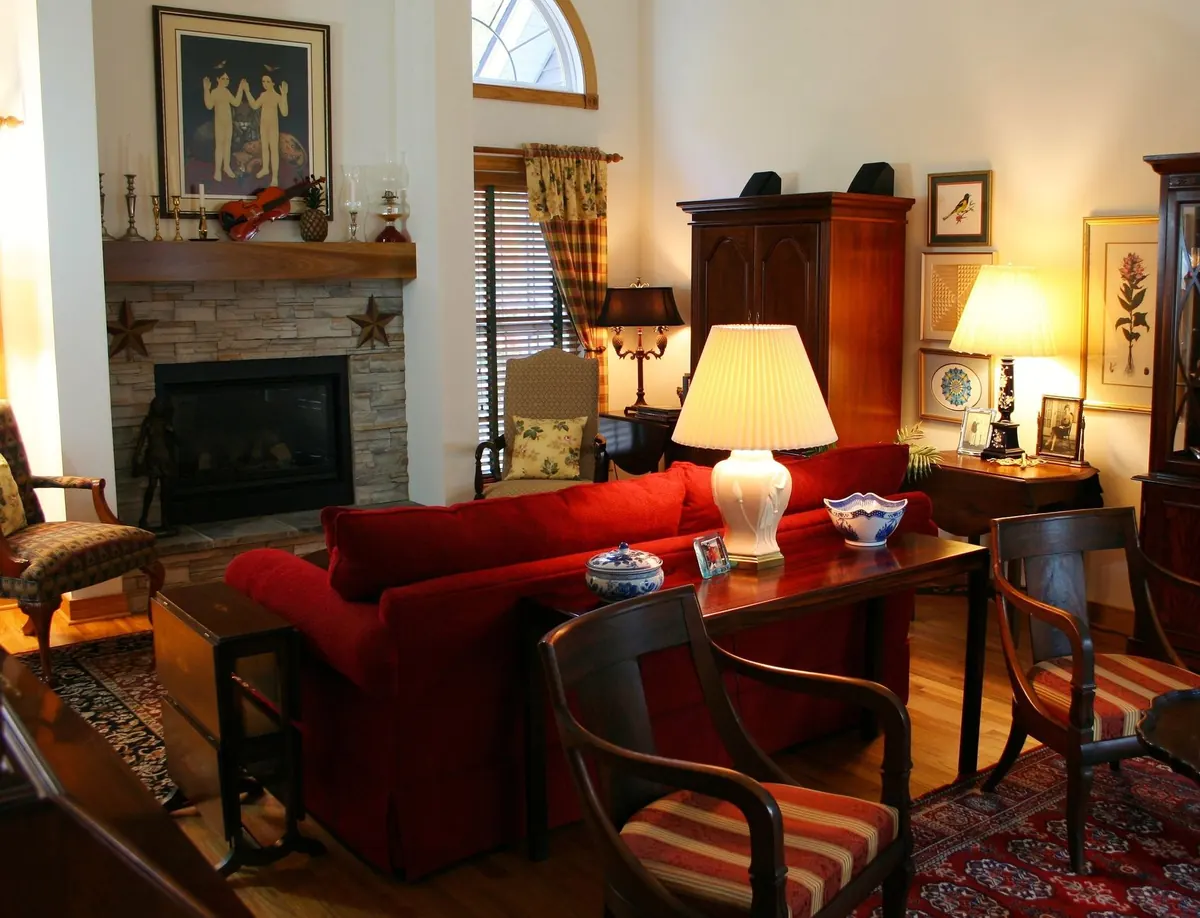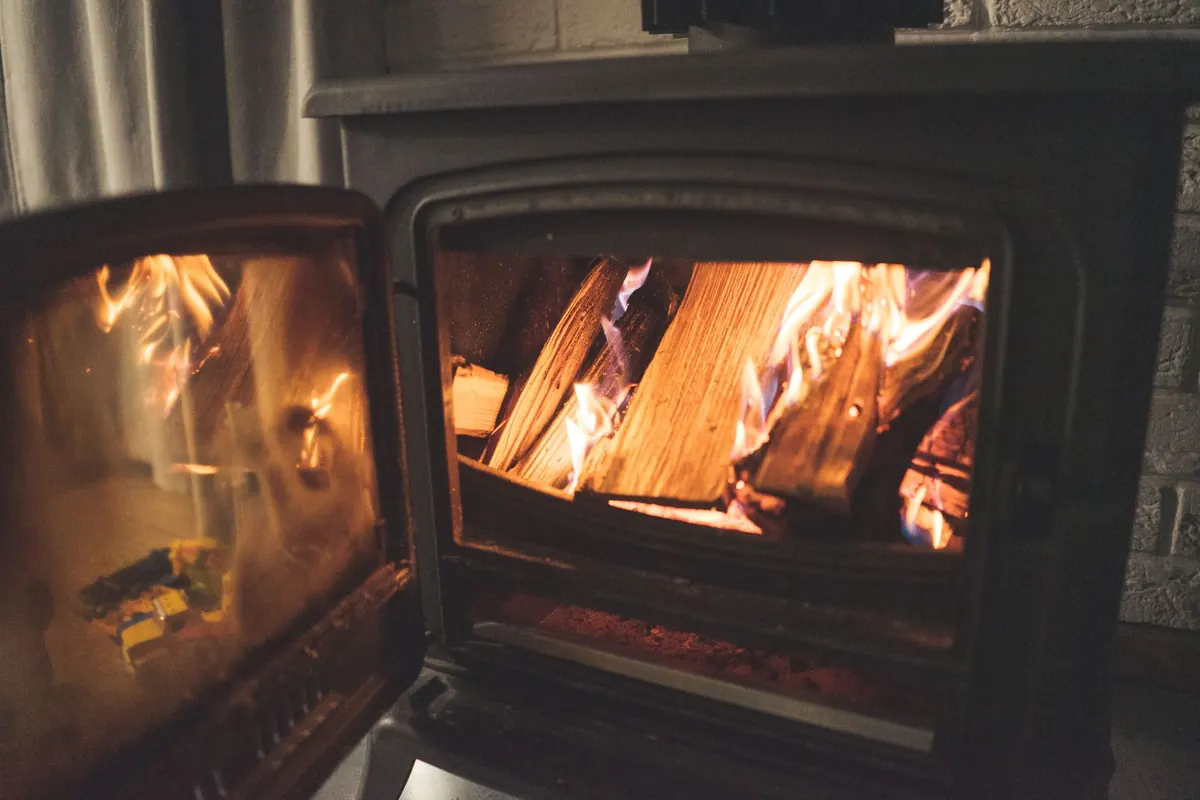
A Victorian fireplace is a pleasure until about the second week of October, when the same opening that once warmed a room starts pulling a thin ribbon of cold air across your ankles. That draught is not a sign that something is broken. It is the chimney doing what chimneys do: acting as a vertical hole in your house, moving air whether or not there is a fire in the grate.
The good news is that most of that cold air can be stopped without disturbing the cast-iron insert, the tiled slips or the slate surround. It takes a candle, a few afternoons, and a willingness to work in the order the air actually travels — flue first, then surround, then hearth, then floor.
Find the draught before you spend anything
Guessing leads to buying the wrong thing. Instead, wait for a cold, still day, shut the door and window in the room, and work a lit candle slowly around the fireplace. Watch the flame rather than your hand: skin is a poor judge, but a flame leaning steadily to one side is not.
Move it along the top edge of the insert, down both sides of the surround, across the hearth where it meets the floor, and along the skirting on the chimney breast. Then hold it just inside the opening itself. In an unused fireplace, that last test is usually the dramatic one.
If the flame bends towards the gap, air is coming in. If it bends towards the flue, air is leaving. Both cost you heat.
Mark each spot with a light pencil dot you can rub out afterwards. A gap the width of a sheet of paper looks trivial and is not: multiplied along a metre of skirting, it will move a surprising volume of air over a winter.
The chimney is almost always the culprit
An open flue is a hole in your roof that happens to be indoors. Warm air rises up it and cold air slides down to take its place, and on a windy day a downdraught can be strong enough to ruffle the pages of a book on the mantelpiece.
If the fireplace is decorative, block the flue at the bottom
Where the grate holds candles, a dried flower arrangement or nothing at all, you can shut the flue off low down. Two approaches work well and both are reversible:
- Chimney balloon. An inflatable bladder on a long neck, pushed up past the damper and pumped up until it grips the flue walls. Effective, cheap, and deflatable in seconds by anyone who knows it is there.
- Wool or felt blocker. A slab of dense felted wool, cut slightly oversize and pushed up on a handle or a length of cord. Quieter than a balloon and less alarming if it ever comes loose.
Whichever you choose, label it. Tie a tag to the handle, leave a note tucked behind the clock on the mantelpiece, and tell anyone who shares the house. A forgotten balloon plus a match is an expensive mistake, and one a chimney sweep sees more often than you would think.
One caveat: a completely sealed flue with no air movement can turn damp, and a damp chimney breast is a far bigger job than a draught. Leave a small hit-and-miss vent in the chimney breast or in the panel across the opening — roughly the size of a postcard is the usual rule of thumb — or ask a sweep to look at the flue before you seal it for good.
If you still light fires, deal with the top instead
Never put anything inside a flue you use. Downdraught is better solved at the pot, with a hooded or cowl fitting that deflects wind across the opening rather than down it. This is a job for a chimney sweep or roofer with a ladder, and it is worth doing in spring, well before you want the fire lit. Have the chimney swept at the same time.
Screens that genuinely earn their keep
A spark guard is standard equipment, but it is not a draught excluder. If you burn wood or coal, the most useful addition is a glass fire screen: it slows the exchange of room air and flue air while still letting radiant heat through, and a plain brass frame suits a Victorian surround far better than most modern accessories.
For an unused fireplace, a decorative screen alone will do almost nothing. The work is done by a solid panel fitted across the opening behind it — a piece of board cut to size, painted matt black, with a small handle and a vent cut into it. From a metre away it simply reads as shadow. The screen in front is then free to be as pretty and as period-appropriate as you like.
Discreet insulation around the surround and hearth
Once the flue is dealt with, chase the smaller gaps. These are the ones you can fix invisibly, in an afternoon, with materials that cost very little:
- Between the back of the surround and the wall — decorator's caulk on painted surfaces, a flexible frame sealant where the two move slightly against each other.
- Between the hearth slab and the flooring around it — a weak sand-and-cement mix on a solid floor, or a flexible sealant where boards are involved.
- Behind the skirting on the chimney breast, which is often where floorboard draughts arrive.
- Between individual floorboards within a metre or two of the hearth — paper-backed draught strip pressed into the gaps with a scraper and a mallet.
- Around the edges of any alcove shelving or cupboard built into the breast.
Use heat-resistant sealant anywhere close to the opening, and keep the repair narrower than you would on, say, a window frame. A hairline bead of caulk, smoothed with a wet finger and painted over, disappears entirely.
What you must not seal
Three things should stay open, whatever the draught. Subfloor air bricks must never be blocked: they ventilate the void beneath suspended timber floors, and closing them traps damp and invites rot. Any permanent ventilation opening serving a gas fire, gas back boiler or solid fuel appliance has to remain clear. And a room with a working open fire generally needs its own outside air supply, so do not seal an air vent in the name of warmth.
If a gas appliance is involved, ask a Gas Safe registered engineer before you change anything. For solid fuel, a HETAS-registered installer or a qualified chimney sweep is the right person to ask. It is a short conversation that saves a great deal of trouble.
The bigger step: a stove in the original opening
A wood-burning or multifuel stove set into the existing fireplace, with a flue liner and a register plate sealing the old throat, is the most thorough way to end chimney draughts while keeping the cast-iron insert and tiled slips on show. It is not a quick job and it is not a cheap one, and it needs a registered installer and, in many homes, building control approval. Listed buildings and conservation areas may need consent as well. But for plenty of Victorian houses, it is where the story ends.
A sensible order of work
- Test with a candle on a cold, still day and mark every draught you find.
- Decide whether the fireplace is decorative or working. Everything else follows from that.
- If it is decorative, block the flue at the bottom with a labelled balloon or wool blocker, and leave a small vent.
- If it is working, fit a cowl at the pot, book a sweep, and consider a glass screen.
- Seal the surround, hearth and skirting gaps with the least visible material that suits each surface.
- Leave every air brick and appliance vent exactly as you found it.
- Re-test a month later. Old houses move, and so do floorboards.
Done in that order, the room keeps everything that makes it worth having — the marble, the ironwork, the deep hearth — and loses only the part you never wanted: the cold air arriving uninvited.
Photo: Michael D Beckwith / Pexels