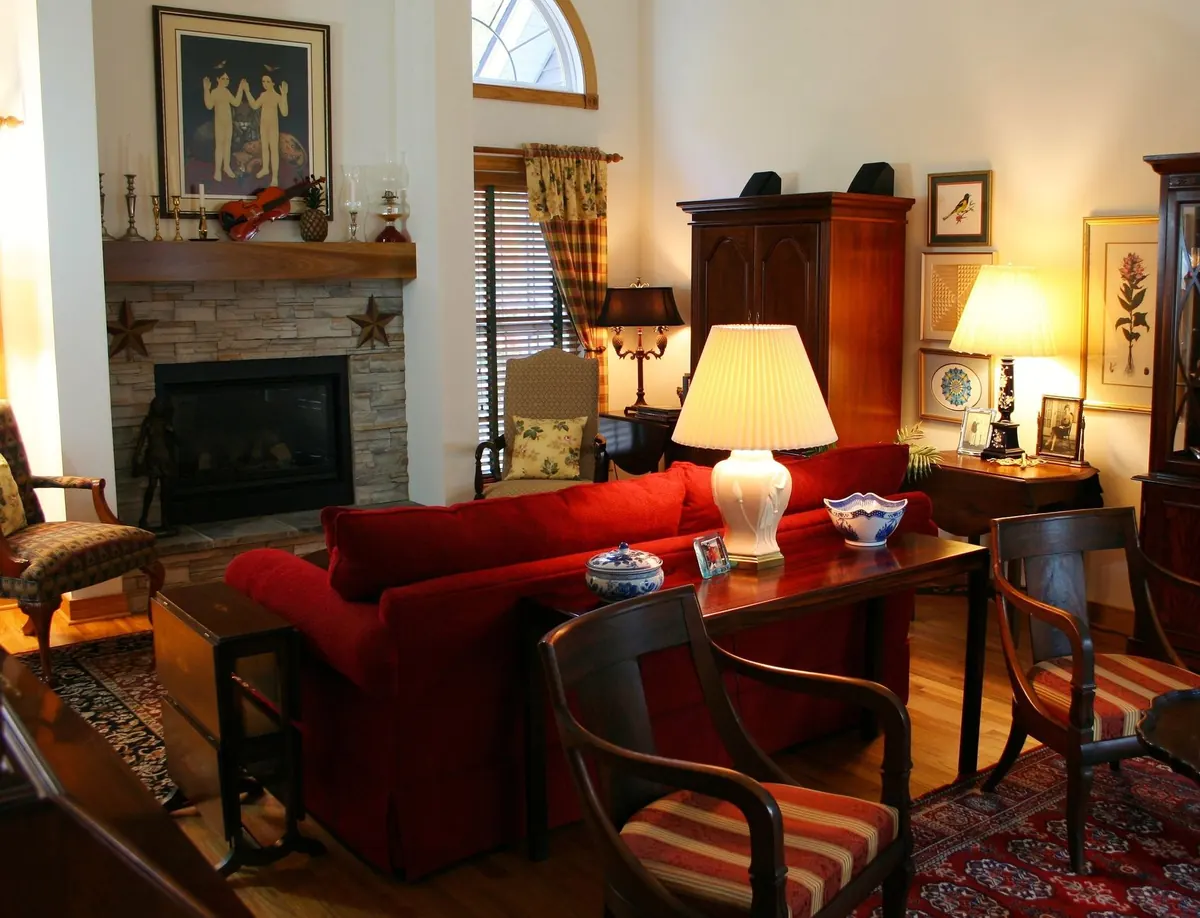
There is a fortnight in early spring when the house stops feeling comforting and starts feeling crowded. The wool throw that earned its place in January now looks bulky over the arm of the sofa. The berry-red cushions seem to be shouting. Nothing about them is wrong — they have simply been overtaken by the season, and by the paler, longer light coming through the window.
Restyling for spring is the cheapest decorating you will do all year, because most of it involves moving things you already own. Start in the room you sit in most, and give yourself a weekend. Here is how to take it from hearth to light.
Start with the light, not the shelves
Before anything moves, stand in the room at a few different times of day and watch what the light does. Spring sun comes in lower and cooler than summer sun, and it shifts round the house quickly: a corner that sat in shadow all winter may now catch a bright patch at four o'clock, while a north-facing room stays flat and grey whatever the calendar says.
That matters, because dark saturated colour reads as rich and sheltering by lamplight, then slightly heavy when the same corner is suddenly lit by daylight. In a room that faces away from the sun, keep one lamp on during the day — a warm white bulb rather than a cool one — and choose lighter textiles, which will lift the space more than repainting it.
Textiles carry most of the change
If you only do one thing, change the fabrics. Texture is what the eye reads as warm or cool, long before it notices a colour. Work through this list in order and stop when the room feels right:
- Throws. Wool, faux fur and chunky knits go into storage. Bring out cotton waffle, linen or a thin knitted cotton.
- Cushions. Keep the inserts, swap the covers, and leave two of the heaviest winter covers in place so the sofa does not look stripped bare.
- Rugs. A thick wool rug is a lovely thing in February and a hot, dark shape in April. Flatweave cotton, jute or a small woven mat work harder now.
- Curtains and blinds. Velvet and heavy lining can give way to linen or lighter cotton. If you own one set only, tie them back further during the day and let the glass work.
- Beds. Flannel and brushed cotton out, percale or linen in. Drop to a lighter duvet and add a cotton blanket you can throw off.
None of this needs buying. Bedding cupboards are usually two-thirds full of the wrong season already.
Shift the colour rather than stripping it out
The instinct in spring is to bleach everything: white walls, white sofa, white everything. In a British spring — grey mornings, cold wind, blossom that lasts a fortnight — an all-pale room can end up looking washed out. Keep one dark anchor. A navy cushion, a walnut side table, a charcoal lampshade, one black frame on the wall: something with weight to hold the lighter tones in place.
Palettes that work well in our light
Sage green with chalky white and pale oak. Soft blue with warm cream and rattan. Blush and terracotta with off-white. Buttermilk yellow with pale grey. Any of these translates easily into a cushion, a tablecloth or a few metres of ribbon on the mantel.
Your sofa, curtains and walls are the expensive decisions. If they still work, leave them, and change the four or five things that cost the least: cushion covers, a vase, a tablecloth, a print moved from one wall to another.
The mantelpiece: from hearth-heavy to spring-light
This is the smallest stage in the house and the first thing anyone reads on walking in. In winter it holds weight: pillar candles, a stack of logs, brass, dark greenery. In spring it wants height, air and one clear point of interest.
- Empty it completely. Dust the shelf and the wall behind it, and put the winter pieces into a box rather than on the floor.
- Start with one tall element. Blossom in a tall vase, pussy willow, a single stem of eucalyptus or a slim candlestick. Height gives the display a spine.
- Add one low, horizontal piece to the side: a shallow bowl, two stacked books, a bunch of dried grasses laid flat.
- Layer in two or three small objects — a pebble, a small clock, a photograph — at different heights so nothing sits in a straight line.
- Leave a third of the shelf empty. Emptiness is what makes a spring mantel feel light rather than sparse.
- Deal with the fire itself. If the fireplace works, keep a small basket of logs for cold evenings but move the big stack out of the room. If it does not, a group of candles in glass or a bowl of narcissi does the same job with less weight.
Jobs nobody thinks of as decorating
A room can be restyled in an afternoon and still feel dim, because light is being lost at the window. Wash the glass inside and out, take down net curtains for a soak, and dust the lampshades — a grey film on a linen shade steals a surprising amount of light. Move a mirror if you can; hung opposite a window, it doubles the daylight in a dark hall.
Then the senses beyond sight. Swap the winter candle for citrus, cut stems or linen. Bring scent in from bulbs: hyacinths, narcissi and muscari in glass jars on a windowsill last for weeks and smell like the season. Houseplants count as colour too — a fern does the same visual work as a green cushion.
Put winter away properly
- Wash or dry-clean anything wool before it goes into storage. Moths are drawn to the traces we leave behind.
- Store in cotton bags or lidded boxes rather than sealed plastic, which can trap damp.
- Label boxes by room, not contents: "sitting room winter", not "throws and cushions".
- Leave one wool throw and one pair of thick socks within reach. Spring evenings are cold, and unpacking a box in April is nobody's idea of fun.
A weekend, one room at a time
Work through the house in order of use. Sitting room first, then bedroom, then hall. In each room: textiles, accents, the mantel or shelf, then the window. Give yourself a week before buying anything — half the gaps you notice on Saturday will have stopped bothering you by Wednesday, and what still bothers you is worth spending on.
And keep a little winter. One dark cushion, one candle, one heavy mug. A house that flips cleanly from season to season feels staged; a house with a bit of last season still in it feels lived in.
Photo: Pixabay / Pexels