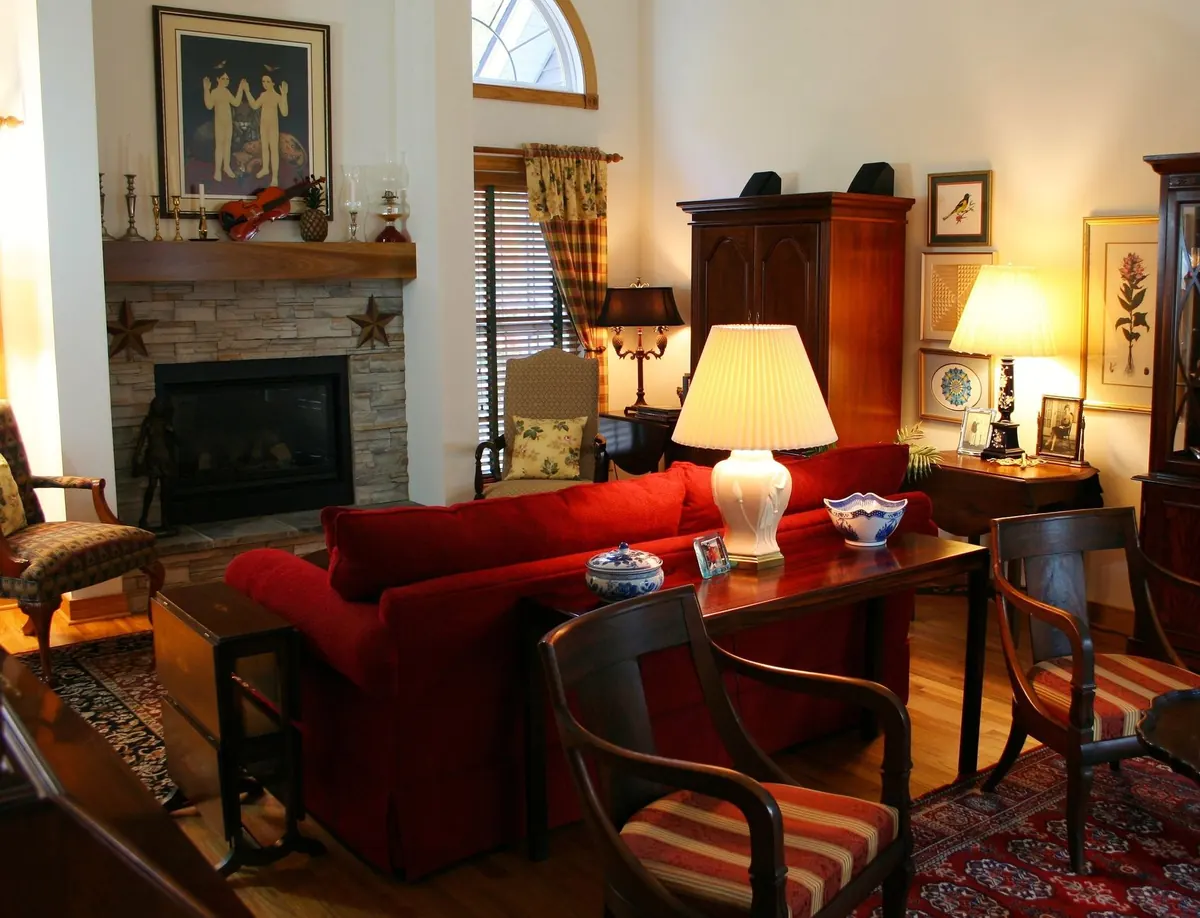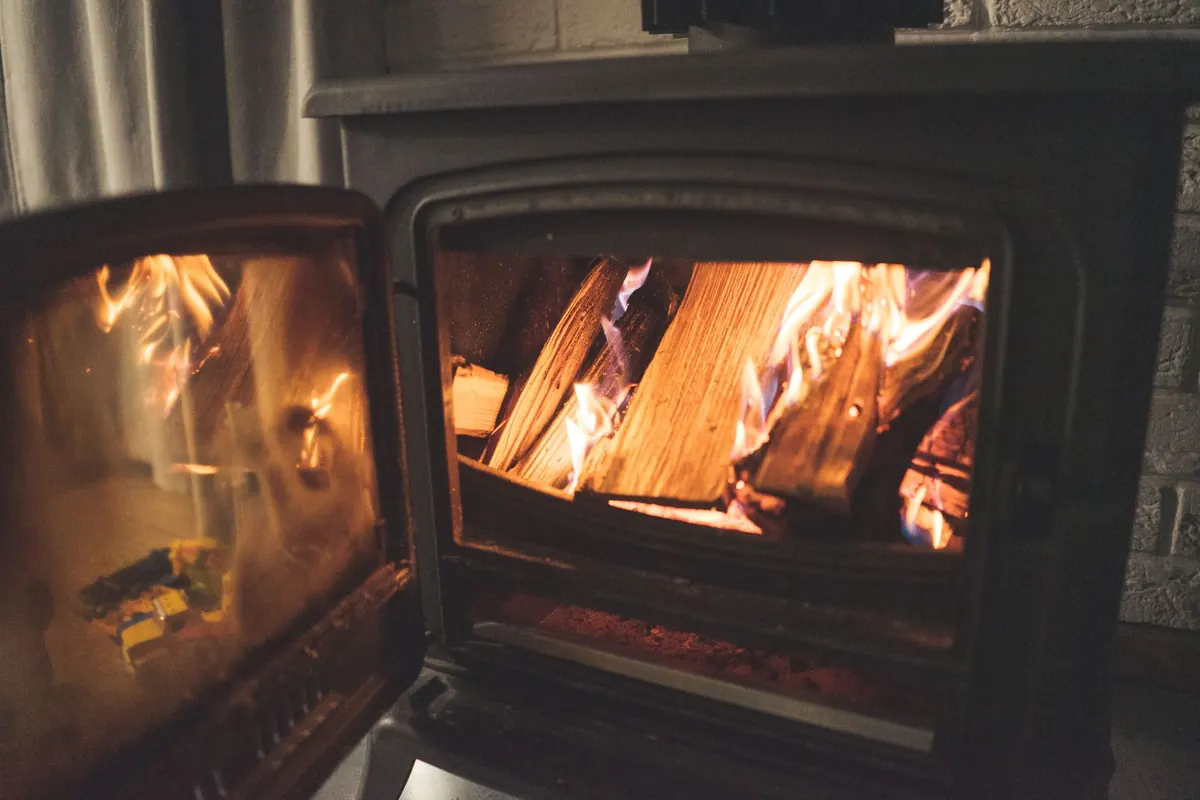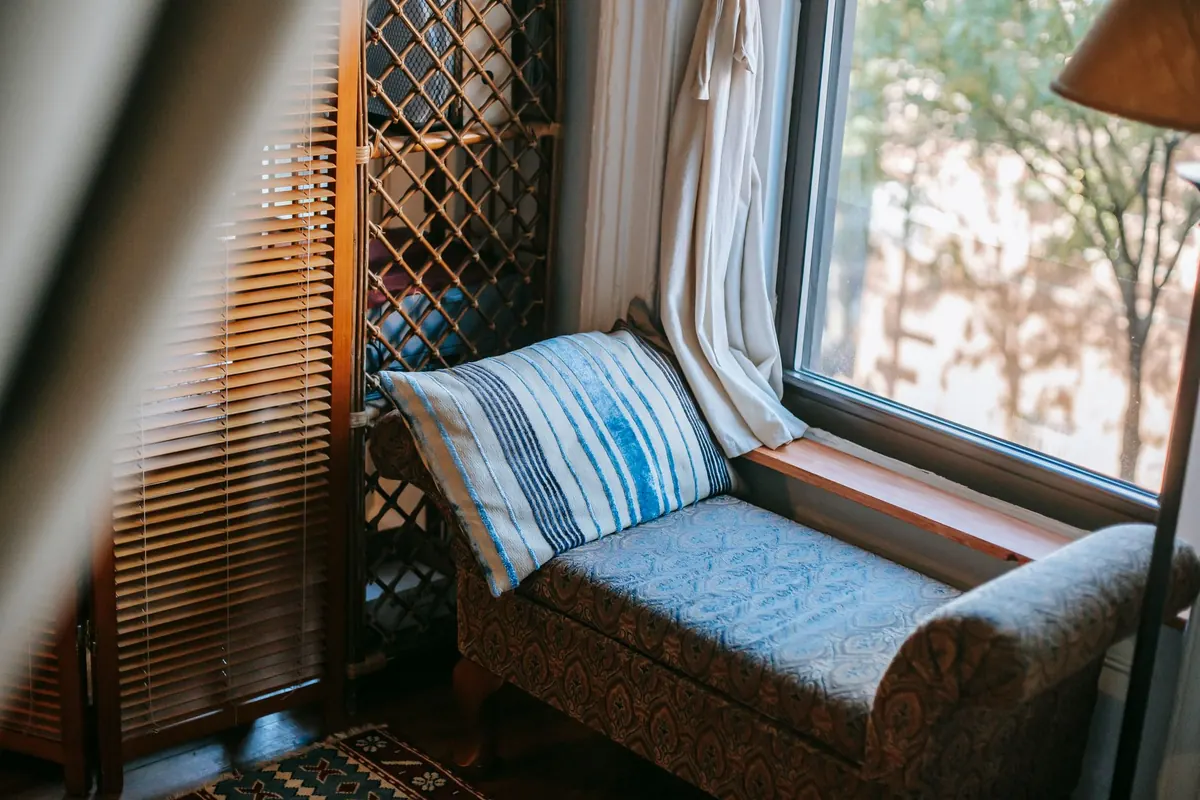
There is a particular kind of pleasure in settling down with a book while the fire ticks and settles beside you. But the corner you choose matters more than you might think. Sit too close and you will roast on one side and freeze on the other. Sit too far and you lose the warmth entirely. Get the layout, light and fabrics right, though, and a patch of ordinary floor becomes the best seat in the house.
What follows is a practical guide to building that spot properly, whether you have a generous inglenook or a modest Victorian fireplace with a metre of space either side.
Start With the Fire and Work Outwards
Before you buy a single cushion, spend an evening watching how your fire behaves. Does it throw heat straight ahead, or does it spill sideways into the room? An open grate tends to send warmth in one direction, while a stove with a door radiates more evenly. This tells you where the chair should face.
As a rough guide, position your main seat somewhere between two and three metres from the hearth. Closer than that and you will be shifting your chair back within half an hour. Much further and you may as well be sitting in the next room.
Angle, don't line up
Resist the temptation to place the chair square-on to the fireplace. A slight angle, turned perhaps twenty degrees towards the room, keeps your face comfortable rather than scorched and lets you see whoever else is in the space. If you have room for two chairs, arrange them in a shallow V so they share the fire without blocking each other's view of it.
Leave a clear path to the hearth. You need to be able to reach the fire for logs or a poker without climbing over furniture, and anyone leaving the room should not have to squeeze past a footstool.
Choose Seating That Encourages You to Stay
The chair is the heart of the nook, so it is worth being choosy. Deep, low armchairs look wonderful but can be difficult to rise from, particularly for older readers. Something with a firm seat, a back high enough to rest your head, and arms that support a book at the right height tends to work better for long sessions.
- Wingback chairs are ideal beside an open fire, as the wings shield your face from draughts and direct heat.
- A small sofa or loveseat suits a wider chimney breast and lets two people read together without competing for the best spot.
- A rocking chair or recliner adds gentle movement, though check it does not tip back into the hearth.
- A footstool matters more than people expect — raising your feet takes pressure off your lower back and makes an hour of reading feel like twenty minutes.
Whatever you pick, sit in it in the shop or at home before committing. Ten minutes in a chair tells you far more than any description.
Layer the Light
Overhead lighting is the enemy of a reading nook. A single bright ceiling fitting flattens the room and washes out the fire's glow. Instead, build light in layers so you can adjust the mood as the evening goes on.
A floor lamp behind your shoulder is the most useful piece you can add. It casts light onto the page without shining into your eyes, and it leaves the rest of the room in soft shadow. Choose a shade that directs light downwards, and pick a warm bulb — something around 2700K keeps the atmosphere golden rather than clinical.
Small lights, big difference
A pair of candle-style wall lights either side of the chimney breast give a pleasing symmetry and can be dimmed independently. Battery-operated candles or a string of warm fairy lights tucked along the mantel add a gentle flicker without any wiring. If you read on a tablet or e-reader in the evening, turning the screen's brightness down and using a warm setting will be kinder on your eyes and less disruptive to the room's mood.
Keep a small torch or rechargeable lamp within arm's reach. Firelight is lovely but unpredictable, and you will be grateful for it when the logs burn low.
Textiles Do the Heavy Lifting
Warmth in a room is as much psychological as physical. Wool, brushed cotton, linen and velvet all read as inviting, and they soften the hard edges that fireplaces tend to create.
Start with the floor. A thick rug in front of the hearth defines the nook and stops cold air creeping around your ankles. Look for a wool or wool-blend rug with a dense pile; it wears better near a fire than loose synthetics, which can mark easily from sparks and ash. If you have a wooden or stone floor, an underlay makes a real difference to how warm it feels underfoot, and to how long the rug lasts.
Then add layers you can move. A throw over the back of the chair, a cushion or two for lumbar support, and perhaps a small blanket in a basket beside the hearth. Natural fibres such as lambswool or a cotton-wool blend breathe better than pure acrylic and will not make you clammy after an hour.
Nothing dates a reading corner faster than a single heavy curtain and bare boards. Two or three soft layers give you somewhere to sink into.
Keep safety in mind
Loose textiles near an open fire need care. Keep throws, rugs and curtains well clear of the grate, and never drape anything over a stove or heater to dry. Fit a fireguard if you have children, pets, or simply want the reassurance. It is also worth having your chimney swept regularly and checking smoke alarms — if you are unsure how often your particular fire or stove needs servicing, ask a qualified chimney sweep or heating engineer.
The Small Details That Finish the Space
A side table just large enough for a mug, a pair of glasses and the book itself will be used more than you expect. A narrow console behind the chair works well if floor space is tight, and it keeps the fire surround clear.
Think about storage, too. A basket for logs, a lidded box for kindling, and a small tray for matches and a lighter keep the area tidy without hiding the things you need. If you have a mantel, treat it as a display shelf rather than a dumping ground: a few books, a candle, a small clock. Clutter catches the eye and breaks concentration.
Finally, consider scent and sound. A bowl of dried orange slices or a scented candle placed well away from the fire adds warmth without overwhelming the room. If you like background noise, a quiet playlist of instrumental music or simply the sound of the fire is usually enough.
A Few Practical Notes Before You Settle In
Build your nook in stages. Put the chair in place first and sit in it for an evening with a book. Then add the lamp, then the rug, then the textiles. Doing it this way means you notice what is actually missing rather than buying a set of things that look good and feel wrong.
Keep the fire's practical demands in view. You need somewhere to put a hot poker, a clear route to the log basket, and a surface that will not be damaged by a stray ember. A small hearth rug or a slate tile under the log basket solves most of it.
Above all, test it. A reading nook is only cosy if you actually use it, so choose the chair you will not want to leave and the light that lets you read past midnight. The rest is detail.
Photo: Charlotte May / Pexels