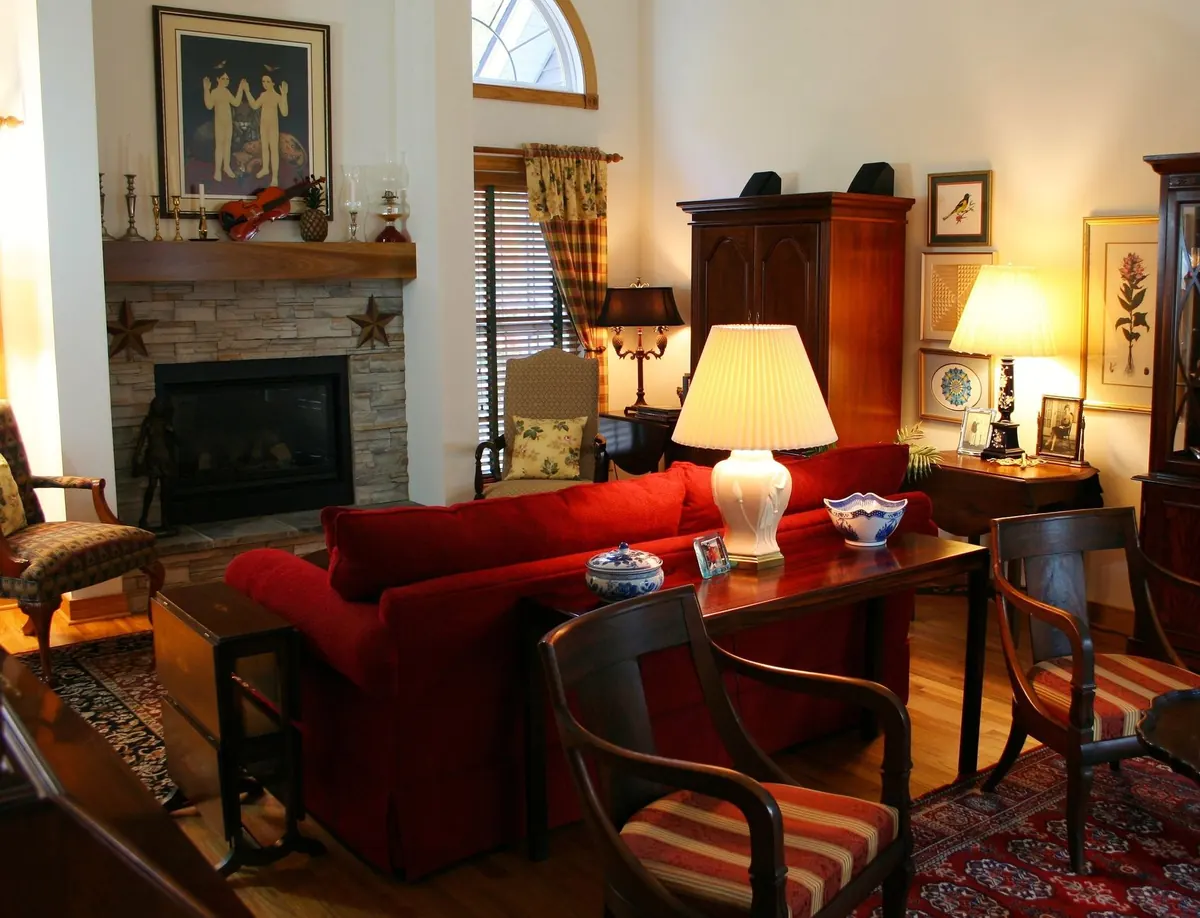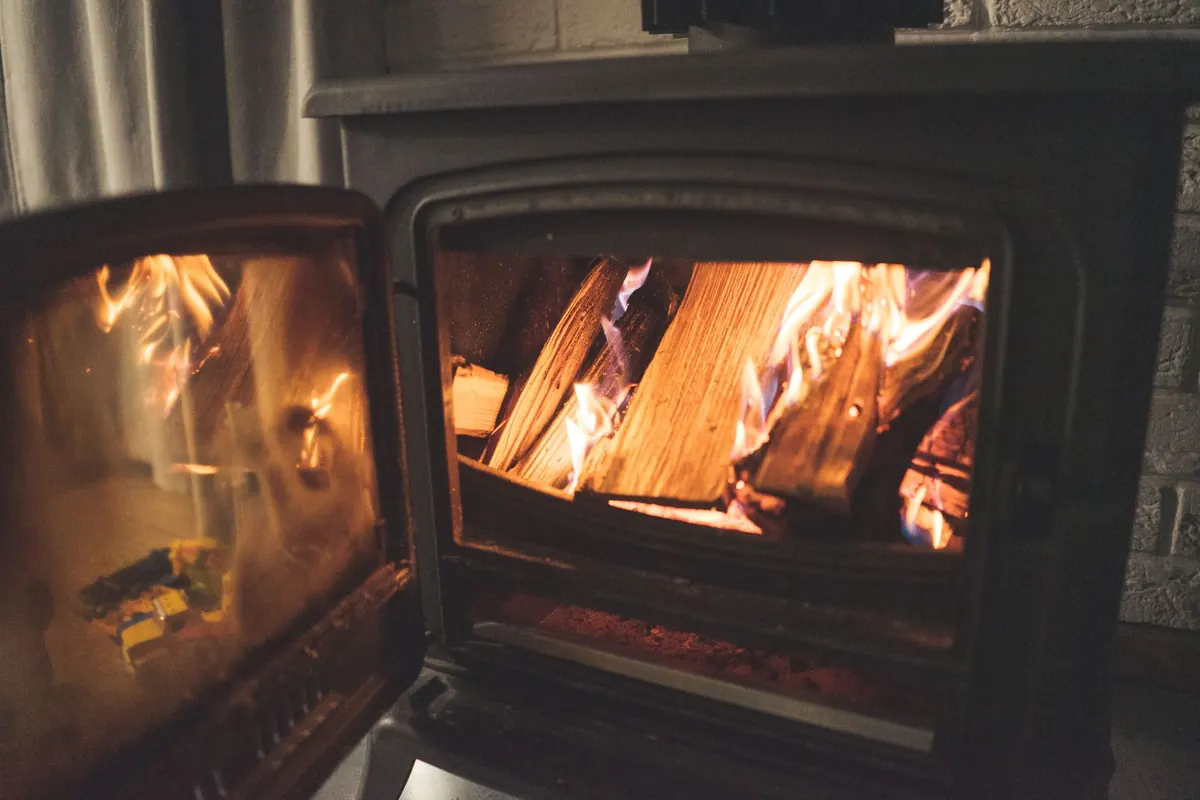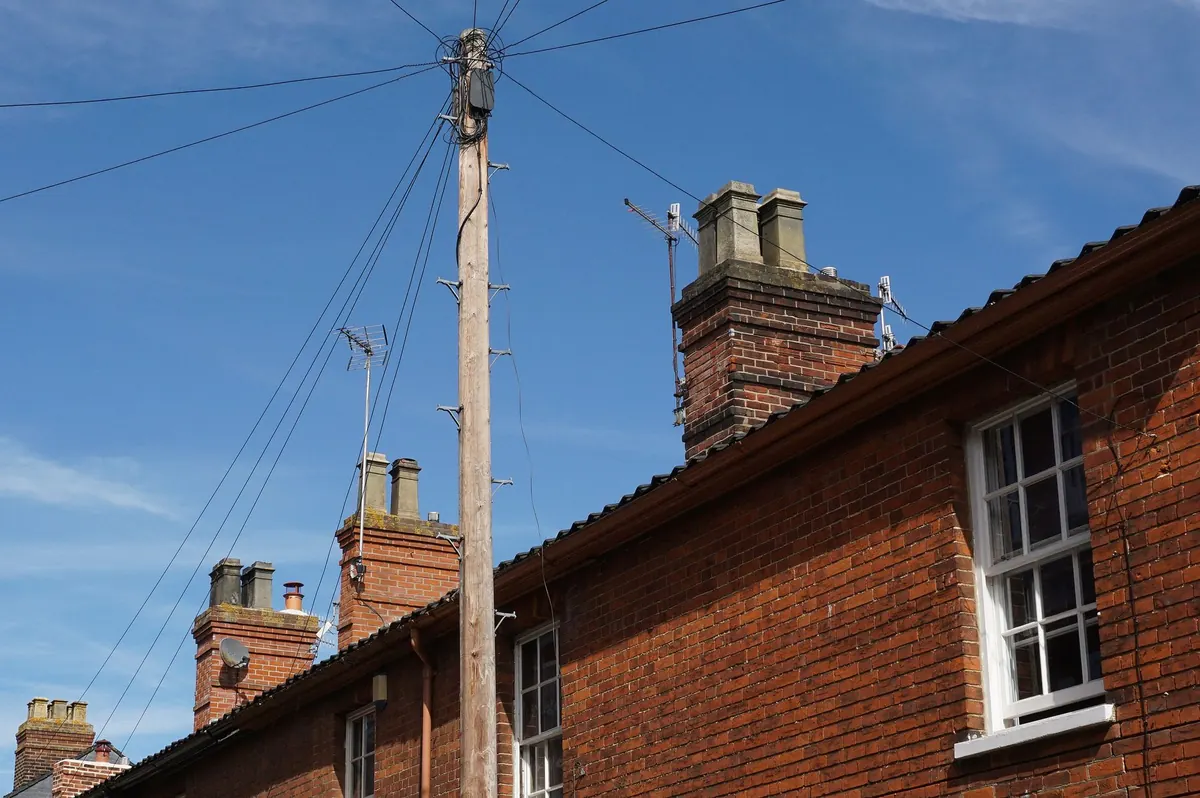
There is a particular pleasure in an open fire on a wet Tuesday in November — the crack, the smell, the way the room quietly rearranges itself around the hearth. What that fire depends on, though, is not the basket of logs but the column of brickwork and air above it. A chimney is a working piece of engineering, and when it stops doing its job it tells you: smoke in the room, a sulking fire, a smell of soot in August. None of it is mysterious once you understand draught, chimney types, cowls and ventilation. Here is what matters.
Why a fire needs draught, not just fuel
Light a fire and it warms the air above it. Warm gas is lighter than the cold air outside, so the column inside the flue rises — and something has to replace it. That something is room air, pulled in under the fire and up the chimney. This is draught, and it is the single most important thing about your hearth.
Two factors govern how strong it is. The first is height: a taller flue holds a longer column of warm gas and pulls harder. A common rule of thumb is that an open fire wants a good four and a half metres of flue above the hearth, though roof shape and surrounding buildings matter too. The second is heat. A flue that is cold, damp or thick with soot simply will not draw.
That explains the most common complaint of early autumn. The first fire of the year smokes, then behaves perfectly a week later. The flue was cold and had not dried out. A rolled sheet of newspaper, lit and held briefly near the throat of the fireplace, will warm it enough to start the draw. Never put your arm inside the opening while you do it.
The chimney types you will meet in British homes
Chimneys vary enormously with the age of the house, and what suits a coal fire in a Victorian terrace is not always right for a modern stove.
- Masonry with clay liners. The classic arrangement: brick stack, one or more clay pipes running up inside it. Reliable, but the joints between pipe sections can crack, and a cracked liner lets smoke and heat into parts of the chimney it should never reach.
- Unlined brick or stone flues. Common in older properties. The inside may have been rendered or parged, but the surface is often rough, which gathers soot and tar and makes sweeping harder.
- Precast concrete flue blocks. Found in many houses built from the 1960s onwards. These are shallow and usually intended for gas fires rather than an open solid-fuel fire.
- Flexible stainless steel liners. Fitted inside an existing chimney to give a smooth, sealed, correctly sized flue. Popular when an open fire or stove is being brought back into use.
- Twin-wall insulated stainless steel. A factory-made flue, usually run up the outside of a building where there is no chimney at all.
What cowls and terminals actually do
A cowl sits on top of the chimney pot. Some are there simply to keep rain out; others are designed to cure downdraught, that infuriating reverse flow that pushes smoke back down into the room when the wind shifts. A good anti-downdraught cowl can transform a fireplace that has always been awkward.
Bird guards matter more than people expect. Jackdaws and starlings nest in chimneys readily, and a nest is a blockage with feathers on it. A spark guard, meanwhile, is worth having if your roof or thatch is anywhere near the flue outlet.
The caution is this: a cowl that reduces the open area of the flue will reduce draught. Fit one that is too restrictive and you will cause the very smoking problem you were trying to solve. If a cowl has been added and the fire has never drawn properly since, suspect the cowl before you suspect the fire.
Warning signs that need attention
Chimneys rarely fail without warning. Watch for any of these:
- Smoke spilling into the room when you light up, or when the wind changes direction.
- Dark streaks above the fireplace opening or across the chimney breast — that is soot carried by smoke escaping where it should not.
- A soot or tar smell in the room, especially in warm weather or during heavy rain.
- A fire that is slow to catch and burns sullenly whatever fuel you use.
- Grit, mortar crumbs, or flakes of tile on the hearth. Something is breaking down inside the flue.
- Scratching, cooing or droppings around the chimney pot.
- Headaches, drowsiness or nausea when the fire is lit. Open the windows, let the fire out, and get the flue checked before you use it again. If symptoms persist, seek medical advice.
An audible carbon monoxide alarm, suitable for solid fuel, is a sensible companion to any open fire, and it belongs in the same room as the hearth.
Ventilation: the other half of the equation
A fire cannot draw air that the room will not give it. In older, draughtier houses this rarely comes up. In a modern home with sealed windows, draught-proofing and a busy kitchen, it can be the whole problem. Extractor fans, cooker hoods and bathroom fans all take air out of the house, and somewhere it has to come back in — often down your chimney.
A quick test: crack a window an inch or two while the fire is lit. If the fire brightens and stops smoking, the room is short of air. The long-term fix is a permanent, correctly sized air vent, usually in an outside wall or a floor. If your fire shares a room with a powerful extractor fan, this matters even more.
A short routine that keeps a flue healthy
- Burn dry, seasoned wood or a suitable smokeless fuel. Wet wood wastes heat and coats the flue with tar. If you live in a smoke control area, check with your council before burning coal or wood.
- Do not slumber the fire overnight. Damping it down to tick over produces the cool, smoky conditions that deposit tar.
- Have the chimney swept regularly — the usual guidance is at least once a year for smokeless fuel, twice for coal, and quarterly during the season for wood. Always before the season starts, and after any long period of disuse.
- Give the fireplace a look over when you clean it out: check for crumbling mortar, loose bricks and damaged fireback or grate.
- Keep the top of the stack in view when you are outside. Missing pots, cracked pots and crumbling flaunching are easy to spot and cheaper to fix early.
Knowing when to call in a professional
Sweeping, a CCTV inspection of the flue, lining, and fitting cowls are all jobs for someone who does them daily. Look for a sweep who belongs to a recognised trade association and who will give you a certificate of sweeping — useful if you ever sell the house or need to claim on insurance.
Gas and oil appliances need different qualifications again: gas work must be carried out by a Gas Safe registered engineer. If you are at all unsure whether a problem is the fuel, the appliance, the flue or the room, stop lighting fires until someone qualified has looked at it. A chimney is a small thing to get right and an expensive one to get wrong.
Photo: Suzy Hazelwood / Pexels