There's a particular kind of disappointment in settling down to the first fire of the season, striking a match, and watching a thin grey ribbon of smoke curl out of the stove door and across the living room instead of disappearing neatly up the chimney. Your eyes sting, the room smells like a bonfire, and you spend the evening with the windows open in November.
It's almost always fixable, and it's rarely the stove's fault. Smoke takes the path of least resistance. Your job is to make the chimney that path.
Why smoke comes back instead of going up
A chimney draws because warm air is lighter than cold air. When the flue is cold, the column of air inside it is heavy and lazy, and it hasn't the slightest interest in moving upwards. Light a fire underneath those conditions and the smoke looks for somewhere else to go, which usually means out of the door and into the room.
Three other things make it worse. Poor pressure in the house — a kitchen extractor fan, a bathroom fan, an open window upstairs — can pull air down the chimney. Damp or oversized fuel smoulders rather than burns, producing more smoke than the flue can carry. And a stove shut down too tightly leaves the fire gasping for air, with nowhere for the smoke to go but out.
Set the stove up before you light anything
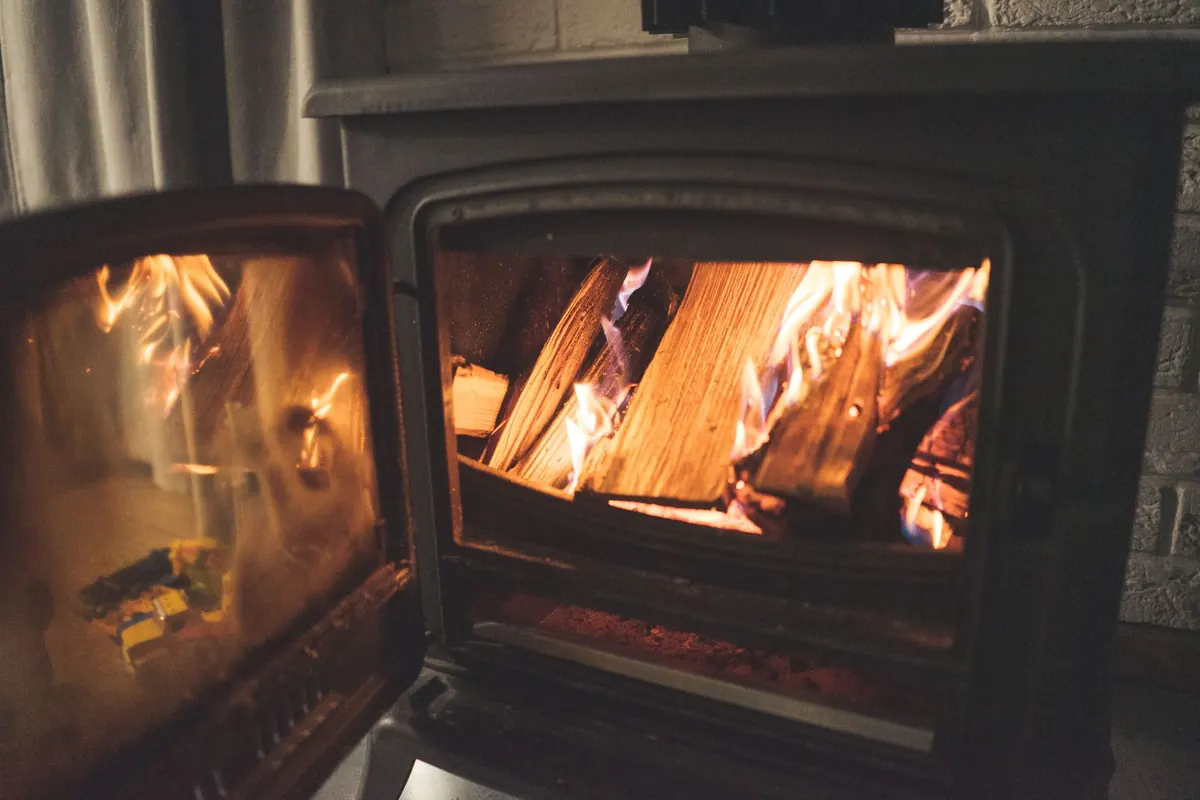
Start with the controls. Most stoves have a primary air control, usually at the bottom, and a secondary or airwash control, often at the top. Open both fully. If there's a flue damper, open that too. Air is the whole game in the first few minutes, and you can always close things down later.
Then look inside. The baffle plate at the top should be sitting where it belongs — a baffle that has slipped can push smoke straight back at the door. Clear out excess ash but leave a thin bed, roughly a centimetre, because it insulates the base and helps the next fire along. A few housekeeping jobs make a visible difference:
- Open a window in the same room by a centimetre or two. It sounds wrong, but it gives the stove air and stops the room fighting the flue for it.
- Turn off extractor fans, and don't open doors or windows elsewhere in the house while you light up.
- Check the carbon monoxide alarm. Any solid fuel appliance needs one, and it should be tested regularly.
- Make sure the chimney has been swept within the last year, more often if you burn a lot. A restricted flue is a smoker.
Warm the flue first
This is the step most people skip, and it fixes the problem more often than anything else. You need to reverse the flow of cold air in the chimney before you introduce smoke to it.
Roll a few sheets of newspaper into a loose torch, light the end, and hold it up near the top of the firebox, close to the baffle or flue outlet. Keep your hand and the paper clear of anything that could catch, and don't walk away from it. You'll feel the draught change within seconds as warm air starts moving upwards. A heat gun aimed up the flue does the same job with less mess.
Then hold your hand just inside the open door. If you feel air moving gently inwards and up, you're ready. If there's nothing, or a faint push back towards you, give it another minute.
Build the fire properly
Loosely layered kindling beats a tightly packed pile every time. Air needs to move between the pieces, so build upwards rather than sideways, and keep it small. The top-down method works beautifully in a stove:
- Place two small split logs side by side on the grate, leaving a gap between them.
- Lay four or five pieces of kindling on top, criss-crossed so air can pass through.
- Add a firelighter or a twisted sheet of newspaper on top of the kindling, not underneath it.
- Light it, leave the door slightly ajar for a minute, then latch it.
Use dry wood — under about 20% moisture content, which an inexpensive meter will tell you. Kiln-dried logs are reliable, well-seasoned hardwood is ideal, and softwood kindling is perfect for the start. Avoid wet wood, painted or treated timber, and glossy paper. Never burn coal in a stove that isn't designed for it, and if you live in a smoke control area, check what you're allowed to burn before you stock up.
Lighting, and the first ten minutes
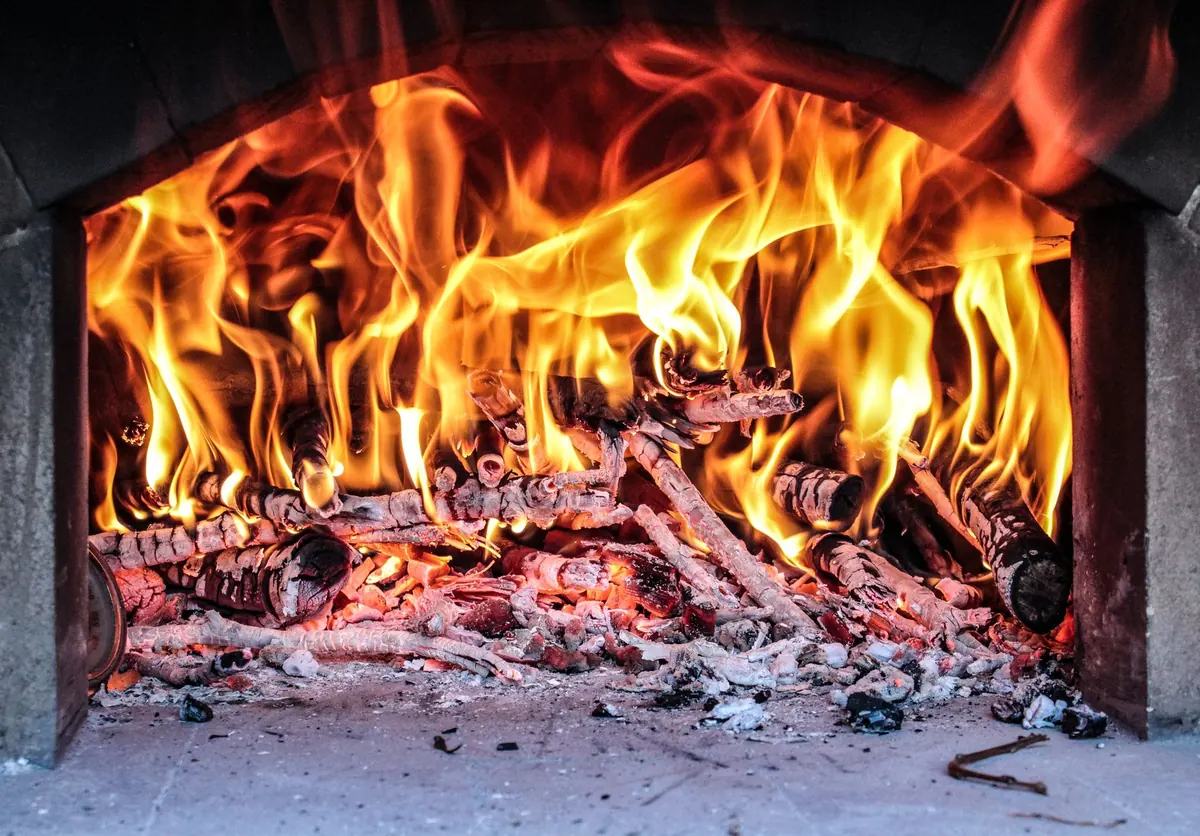
Light the fire, leave the air controls wide open, and shut the door. Watch the flames rather than the clock: you want bright, lively fire with plenty of air, not a slow smoulder.
Once the kindling is well alight, add a couple of small splits rather than one big log. Big logs at this stage smother the fire and create exactly the smoke you're trying to avoid. After five to ten minutes, when the fire is established and the flue is properly warm, start closing the air down in stages. Close it a little, wait, and check the flames are still lively. If the glass blackens and the fire goes flat, you've gone too far.
If smoke still comes into the room
Work through the likely causes in order:
- Smoke when you open the door: open the air control first, wait a few seconds, then open the door slowly, an inch at a time. Yanking it open drags smoke out with it.
- Smoke only when lighting: the flue wasn't warm enough. Pre-warm it for longer.
- Smoke in certain weather: downdraught, common on windy days or where taller buildings and trees surround the house. A cowl or different terminal can help, but that's a job for a qualified sweep or installer.
- Smoke in a well-sealed modern house: the stove is starved of air. A dedicated outside air supply, or a trickle vent left open, can solve it.
If a fix involves the flue, the terminal or the chimney itself, get a registered sweep or installer to look at it. Flues are not a place for improvisation.
Keeping it clean from here on
Refuel on to hot embers, not into a dying fire, and use two or three smaller splits rather than filling the box to the brim. Rake the embers level before you reload, and leave the air controls open for a few minutes afterwards so the new wood catches quickly.
Keep the airwash control open enough that the glass stays clear — that's usually the setting that keeps the flue gases burning rather than smoking. Book a sweep once a year as routine, keep a stock of genuinely dry wood, and the whole business becomes quick and unremarkable. The reward is a fire that lights first time, warms the flue rather than the ceiling, and leaves you with a clean room and a clear head. That, after all, is the point of a hearth.
Photo: Sarah / Pexels